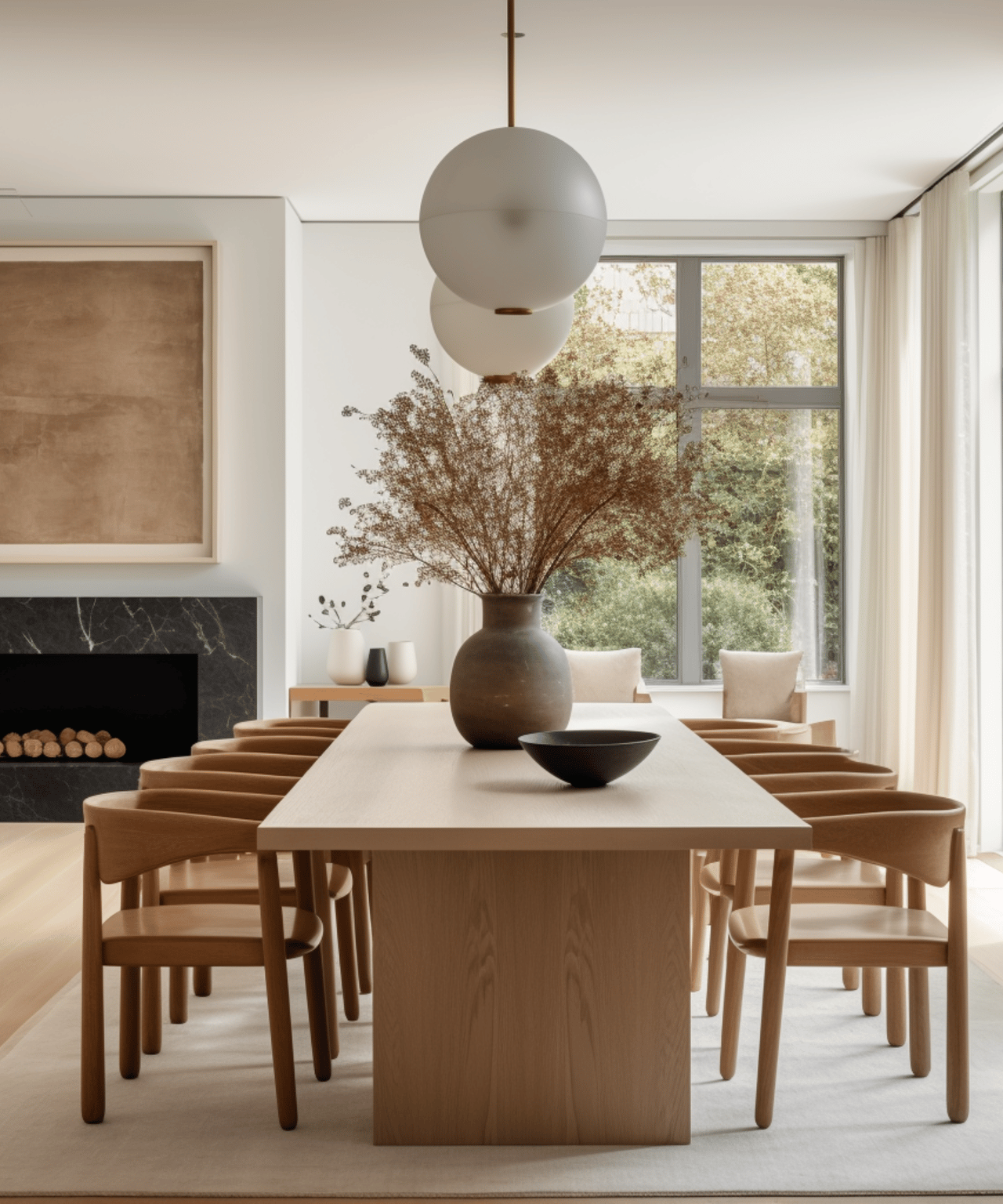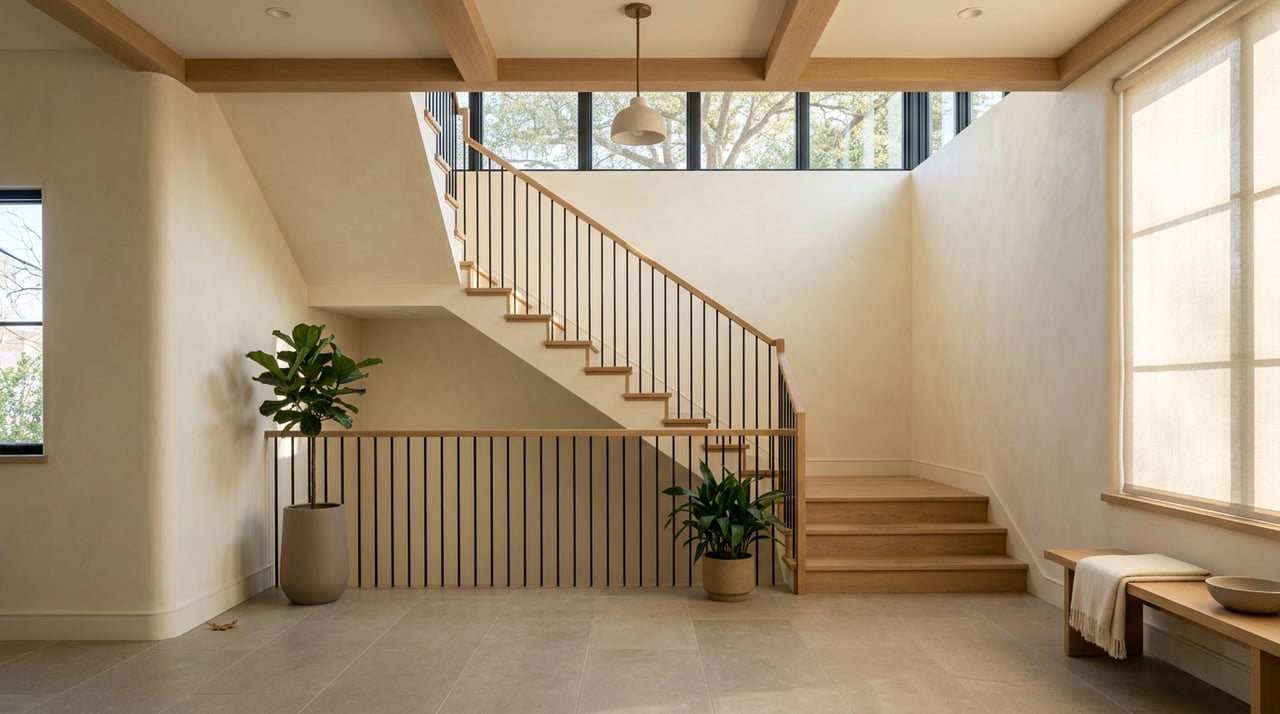
Two houses can sit a quarter mile apart on Stonemill Road and belong to different markets. One is a 4,800 square foot custom home on just under an acre. The other is a 13,000 square foot estate on a similar parcel, with a beach-entry pool, a sport court, a stacked-stone great room, and a Miele kitchen built around a reclaimed-wood island. A single median price averages those two homes into a number that describes neither. For buyers comparing Edmond's gated enclaves, that is the first thing to understand about Indian Ridge, and it changes how the rest of the search should be run.
The number that stops being useful
Most price-per-square-foot logic assumes the homes inside a neighborhood are close cousins. Same era, same footprint band, same finish tier, small variations in lot. Indian Ridge is not that kind of neighborhood. Home sizes here run from roughly 4,800 square feet at the smaller end to about 13,000 square feet at the largest, a spread of almost three-to-one under the same gate. When the underlying product varies that widely, a median or an average smooths over the only variable a buyer actually cares about: which house you are buying.
The practical version of that observation: if you set a search filter at the neighborhood's average price, you may screen out both the house that fits your program and the house that overshoots it, and land squarely on the one that fits neither. A better first filter for Indian Ridge is square footage band and lot use, then price. That is the reverse of how most portal searches are built.
What the gate is actually protecting
Access to Indian Ridge runs off Stonemill Road, south of Northeast 122nd Street after the I-35 exit at 122nd. The gate is not a marketing detail. It changes what the parcels feel like and, more quietly, how they trade.
Inside the gate, lots trend toward nearly an acre, canopy trees are mature, and the road curves rather than grids. The result is a country register within a ten minute drive of downtown Edmond. Buyers touring the neighborhood after seeing new-build product further west often describe the same reaction: the parcels feel older and more settled than the houses on them, because in many cases they are. The land was chosen first, the homes were built to it, and a mature oak canopy is now doing work no landscape architect can shortcut.
That has two effects on value that a spreadsheet will miss:
- Privacy is delivered by trees and setback rather than by fence height or berm. A buyer comparing Indian Ridge to a newer gated section elsewhere is not comparing equal privacy at equal price.
- The neighborhood does not read as a single architectural statement. It reads as a collection of custom homes that share a gate. That is closer to Oak Tree in feel than to a builder-run pod, and it matters at resale.
Reading the house before you read the price
Because the homes vary so widely, the honest way to underwrite an Indian Ridge purchase is to itemize what the specific house already carries. Estate infrastructure that would cost six figures to add after closing is often already there, and its presence or absence is the real explanation for two similar list prices producing very different values.
The features that tend to define the upper half of the neighborhood:
- Resort-scale outdoor living. Covered patios sized for actual dining, outdoor kitchens plumbed for gas and water, stacked-stone or wood-burning fireplaces built into stone walls, and beach-entry pools with automatic covers.
- Sport courts and multi-use flat areas. On almost-acre lots with mature canopy, the flat, cleared footprint for a court is itself a scarce feature.
- Chef-tier kitchens with real brand pedigree, not upgraded builder packages. Miele appliance suites, built-in espresso systems, and dedicated wine rooms show up here more often than in comparable-priced homes outside a custom enclave.
- Cathedral or vaulted great rooms with structural beam work and stone-clad fireplaces. These are expensive to fake later.
- Established organic beds and cultivated gardens on the parcel. Ten-year-old planting has a value that new landscape budgets rarely reach.
A house that carries most of that list at a given price is a different product from a house at the same price that carries two or three items. In a neighborhood where sizes triple across the roster, the finish and infrastructure stack matters more than in a tract, not less.
The build-new-nearby comparison
Buyers who tour Indian Ridge frequently ask the same next question: could I get a comparable outcome by buying land west of Edmond and building. It is a fair question, and the honest answer has two parts.
On raw dollars per finished square foot, custom new construction on a fresh acre can pencil competitively, especially for buyers who are patient and have a builder relationship. What it cannot deliver on a schedule is time-in. The canopy, the settled hardscape, the ten-year garden, the resolved sight lines from window to tree, and the gated-street traffic pattern are all products of years, not budget.
The resale math tracks with that. Estates inside Indian Ridge trade on the strength of the whole property, land plus improvements plus maturity. Newer builds trade largely on the improvements. A buyer paying a premium for a resale in Indian Ridge is buying the maturity line item, and a seller listing here should be pricing it into the number rather than apologizing for build date.
Which section, which vintage
There is no one Indian Ridge. Interior streets vary in tree density, lot geometry, and the era of the homes anchoring them. The workable approach for a buyer is a program-first tour: decide first whether the priority is single-level living on a broad footprint, a taller two-story with dedicated guest wings, or a compound-style plan with detached spaces, then look only at the streets and vintages that deliver it. That is a very different search than filtering the whole gate at one price band and driving until something clicks.
For a seller, the corollary is that positioning matters more than square footage bragging. The buyer who will pay for a 9,000 square foot home in Indian Ridge is not the buyer looking at a 5,200 square foot home three streets away. Marketing that treats the neighborhood as a single audience misses both.
A short FAQ
Is Indian Ridge inside Edmond city limits or Oklahoma City? Addresses in the immediate Stonemill Road corridor sit in the 73131 ZIP, which places them in the Oklahoma City postal footprint east of I-35, while the neighborhood reads and lives as east Edmond. That split can affect utility providers, service districts, and taxing jurisdiction for a given parcel, and it should be confirmed address by address rather than assumed at the gate.
How much land actually comes with a house here? Parcels commonly land near the one-acre mark, with variation by street. That is enough room for the estate features described above without the maintenance profile of a true rural acreage.
Should I wait for more inventory before touring? In a neighborhood this idiosyncratic, waiting for a broader menu rarely helps, because no two homes are close substitutes. Touring what is available, even if it is not the eventual buy, calibrates the program faster than watching feeds.
Working the neighborhood with an advisor
Indian Ridge rewards buyers and sellers who treat it as a collection of custom outcomes rather than a single market. The number to underwrite is never the median. It is the specific home, its infrastructure stack, its lot, and its street, priced against a program you have already defined. That is the work worth doing before an offer, not after.
If you are considering a purchase inside Indian Ridge, or preparing an estate here for market, LISTORSHOW advises on positioning, pricing, and presentation for homes where the property is the product. Reach out for a Free Home Valuation.