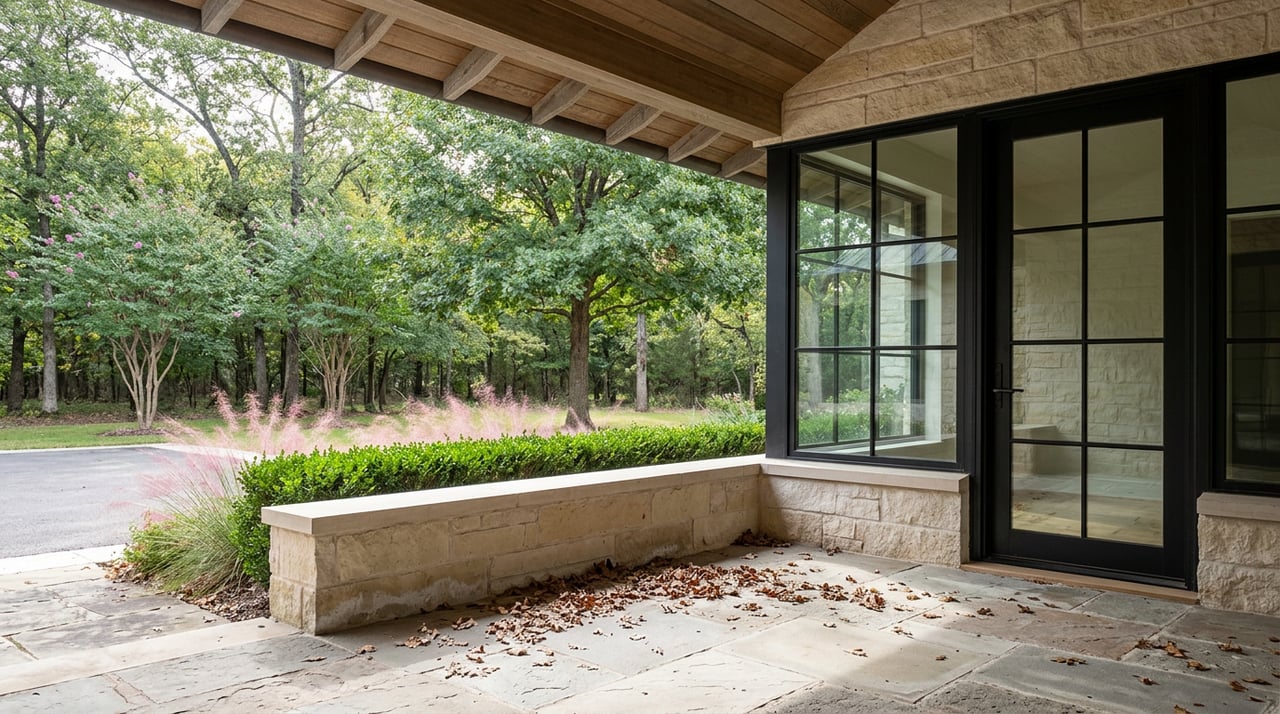
Ask a buyer what a gated community guarantees and most will say the same thing: one HOA, one set of rules, one map you can trust. Indian Ridge, the wooded, private community tucked into unincorporated Logan County just north of Arcadia, complicates that assumption in ways that never show up in a listing photo. The gate is real. The privacy is real. But the rulebook behind it depends on which phase your lot sits in, which section your address falls under, and whether you've paid into a fire department that has nothing to do with city limits.
None of this is hidden exactly. It is all published, in plain language, on the Indian Ridge HOA's own site. It just isn't the kind of thing a buyer thinks to ask about until it's already a problem.
How governance varies by phase
Indian Ridge is still being built out, and the HOA's own FAQ draws a clear line: Phases 1 and 2 are governed by the elected HOA board. Phases 3 and 4 are still controlled by the developer, Dan Mienders. That distinction matters more than it sounds. A homeowner in Phase 1 answers to neighbors who were elected to represent them. A buyer closing on a lot in Phase 3 is, for now, answering to a developer's discretion instead.
The HOA has acknowledged that a future split into separate associations by school district is possible once the developer finishes building out the subdivision, but has said that outcome is unlikely in the near term. Until then, one HOA manages both halves, and the phase you buy into determines who is actually setting the rules on your street.
| What you're buying | Who governs it | Who to ask before closing |
|---|---|---|
| Phase 1 or 2 lot | HOA board (elected) | HOA architectural committee |
| Phase 3 or 4 lot | Developer, Dan Mienders | Developer's office directly |
Buyers can confirm a parcel's phase and ask how it affects governance before closing.
Same gate, two school districts
School zoning varies by section within the community. According to the HOA's own FAQ, Indian Ridge residents are zoned to Edmond schools, while residents of The Lodges at Indian Ridge, a section within the same gated community, are zoned to Guthrie schools. The sections share an entrance and, at least for now, an HOA; the school district depends on the lot's section in the plat.
Buyers for whom a specific elementary or high school assignment is important should confirm zoning against the actual plat map for the lot, rather than relying on the community name.
A gated address tells you what's behind the entrance. It doesn't tell you which section, which phase, or which school zone you're actually closing on.
County services and HOA review
Indian Ridge sits in unincorporated Logan County. The HOA's FAQ identifies three service and amenity details for buyers to consider:
- Logan County does not require building permits for new construction or renovation. The HOA architectural committee reviews and approves exterior changes; this review is separate from county permitting.
- Logan County has no animal control department. The HOA FAQ directs residents to the Logan County Sheriff's Office for dangerous or loose animal calls.
- No walking trail, clubhouse, community pool, or playground is currently funded.
These arrangements are among the details buyers may consider when comparing Indian Ridge with a subdivision inside Edmond city limits, particularly when weighing county services and HOA review processes.
Fire protection and membership
Fire protection is another service buyers can confirm before closing. Indian Ridge is served by the Woodcrest Fire Department, a volunteer department established in 1972 that covers roughly 60 square miles of Logan County. It is not a city department funded by property tax the way Edmond's fire service is. The Woodcrest Fire Department describes its membership model as an annual fee that residents pay directly to the department to maintain coverage.
This is common practice across rural Oklahoma, where the Oklahoma Insurance Department has been explicit that fire protection classifications are one of the factors insurers use to set homeowners' premiums. In a subscription-based rural district, whether a property is current on its membership can be part of that picture in a way it simply isn't inside city limits, where fire service is universal and tax-funded regardless of any individual payment status.
A buyer moving from an Edmond or Oklahoma City address, where fire coverage is assumed and invisible, needs to treat this as a line item to confirm rather than a service that follows the deed automatically.
Documents to review before closing
Every one of these systems is documented, and confirming them before closing is a matter of reading the right pages rather than guessing. The HOA's dues structure, for instance, is specific: annual dues are $600, due in advance by March 1, with an 18 percent compounding late fee after that date and a 3.5 percent surcharge if paid electronically through the HOA's website. Gate access runs through the HOA's gate chairman, Jonathan Bartee, and a beeper for entry carries a $45 fee.
Indian Ridge and subdivisions inside Edmond city limits have different arrangements for services, memberships, and approvals. Buyers can review the HOA's documents to understand the dues and approval processes that apply to a specific lot.
A short FAQ
Does buying in Indian Ridge guarantee my kids attend Edmond schools? Not automatically. The HOA's own FAQ confirms Indian Ridge proper is zoned to Edmond schools while The Lodges at Indian Ridge section is zoned to Guthrie schools. Confirm school zoning against the specific lot, not the community name.
Is fire protection included in my HOA dues? No. Fire coverage comes through the Woodcrest Fire Department's own membership structure, separate from the HOA. It is worth confirming membership status as part of due diligence, the same way you'd confirm a well or septic inspection.
Who approves changes to my property if the county doesn't issue permits? The HOA's architectural committee reviews exterior modifications, using the community's CC&Rs and bylaws as the standard, even though Logan County itself does not require a building permit for the work.
If I buy in Phase 3 or 4, do I still get an HOA vote? Not yet in the same way Phase 1 and 2 owners do. Those phases remain under the developer's control until the subdivision is fully built out and formally turned over to the HOA board.
Buyers weighing acreage, privacy, and school zoning can review the Indian Ridge plat alongside a listing and confirm the details for a specific lot before making an offer.
If you're comparing Indian Ridge to another Edmond-area community and want help reading the plat, the phases, and the paperwork before you write an offer, LISTORSHOW can walk through it with you.
This article is general information, not legal, tax or financial advice. Consult a qualified professional about your situation.