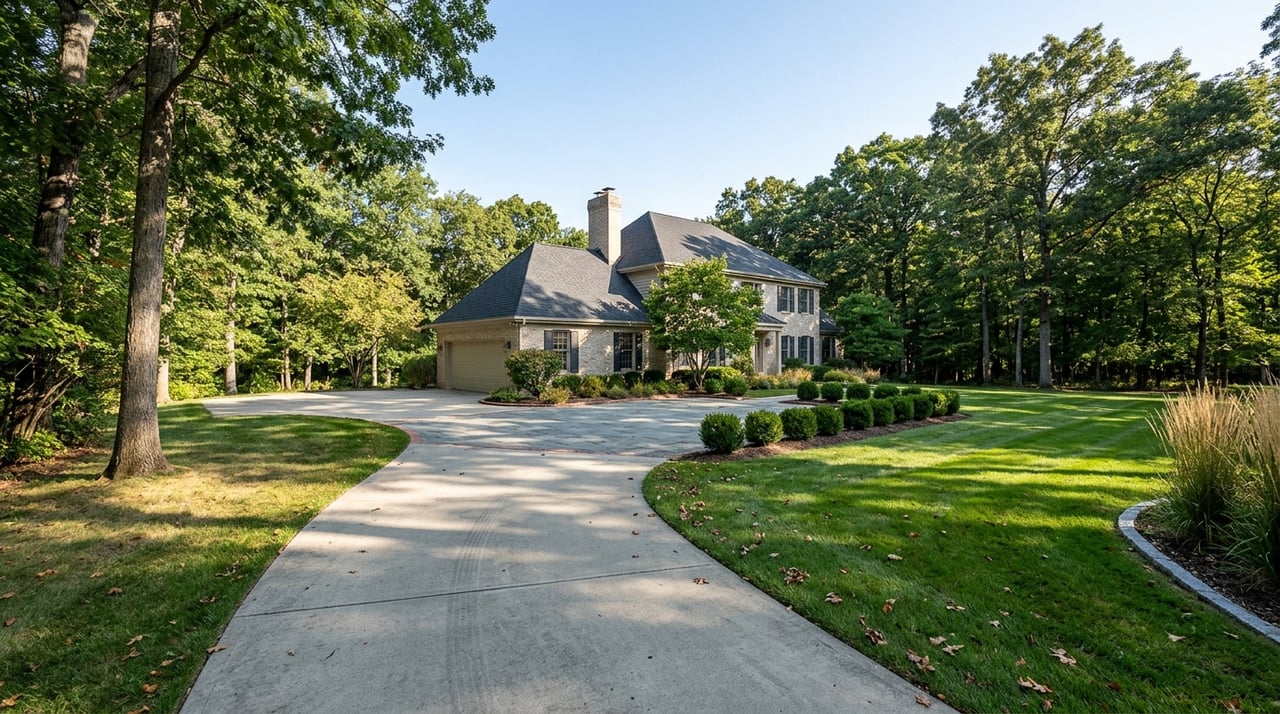
A buyer walks the gate at Pravada, falls for a wooded two-acre homesite with room to breathe, and starts pricing the build against a median they saw on a portal search for Arcadia. The math looks generous. Then the builder mentions the well. Then the septic system. Then the six hundred feet of driveway that has to be graded and graveled before a foundation crew can even show up. The number the buyer walked in with and the number they're now facing belong to two different houses.
This post looks at how lot requirements and site infrastructure can affect the cost of building in Pravada.
How lot size affects permits and site planning
Pravada's homesites run around two acres each, and the community is built with a minimum square footage standard higher than a typical Edmond subdivision. One builder active in the neighborhood, MassaRossa, sets that floor at 3,500 square feet. That's the builder's stated minimum; the septic rules discussed below address lot size.
Oklahoma's septic regulations, administered through the state's Department of Environmental Quality and summarized by Oklahoma State University Extension, set minimum lot sizes based on the water source. A property on a public or rural water supply needs at least half an acre to support an on-site septic system. A property running on a private well needs at least three-quarters of an acre. Add setback requirements from the well itself, from property lines, from any nearby pond or stream, and a half-acre lot on paper starts shrinking fast once an engineer draws the actual field.
Pravada's wooded, rolling two-acre parcels provide room for a 3,500-square-foot footprint, a driveway, a pad site, and the setbacks the state requires. Lot size and utility setup are factors to review when planning a build.
Site costs to compare before hiring a builder
Site costs to consider include a well, a septic system, and a long gravel driveway before construction can start. Those costs are useful to compare with a subdivision closer to Edmond's core, where city water and sewer run to the curb and the only line item is a tap fee.
A separate guide to Edmond's new-construction market makes the same point from the builder's side: tracts outside the urban core support bigger footprints and hobby uses, but they carry added site costs for utilities, septic systems, wells, and longer driveways. None of that shows up in a median price. All of it shows up in a construction draw schedule.
A useful comparison for a buyer evaluating a Pravada lot and one inside Edmond's established grid is between a site-ready lot and raw acreage that needs six figures of infrastructure before the framing crew arrives.
How the median compares with site costs
One builder active in the neighborhood, Silver Stone Homes, prices custom houses on Pravada's two-acre lots from $650,000 to $1,200,000. Set that against Edmond's citywide median sale price, which ran $392,000 for the three months ending May 2026, down 3.9 percent from the same period the year before, and the gap looks like a straightforward luxury premium.
Part of that gap is ordinary luxury pricing. Part of it is the septic and well infrastructure baked into every acreage sale, cost that never shows up as its own line in a citywide median. A buyer who only compares medians is comparing a number that includes site development costs against a number that mostly doesn't.
The median is only a starting point for comparison. Two homes at the same square footage, one inside city utilities and one on well and septic, can carry a five- or six-figure gap before a single interior finish is chosen.
What actually drives the number in Pravada
With septic lot-size rules and builder square-footage minimums considered separately, the other cost drivers in a Pravada purchase become clearer:
- Water source. Well versus rural water district service changes both the minimum lot size and the ongoing cost of pumping, treatment, and maintenance.
- Septic engineering. Distance from any pond, stream, or property line adds engineering and permitting time before a builder can even pull a construction permit.
- Driveway length. A homesite set back from the road on two acres needs more graded, graveled, or paved driveway than a standard subdivision lot, and that cost is rarely itemized in early conversations.
- Builder covenants. A 3,500-square-foot minimum removes the option of a smaller, less expensive footprint that might otherwise make sense for a downsizing buyer or a second home.
- Architectural review timelines. Gated communities with design standards typically require plan approval before groundbreaking, which adds calendar time a buyer on a tight relocation schedule needs to plan around.
These costs may not be itemized in a portal's summary card, so consider them when reviewing the construction-to-permanent loan draw schedule and the overall project budget.
What relocation buyers should consider
A local buyer who has lived in Edmond for a decade already has a rough sense of which pockets run on well water and which run on city lines. A relocation buyer comparing Pravada with a subdivision where every lot ties into municipal utilities may be less familiar with well, septic, and driveway costs, so those details are worth considering early in the process.
The same is true for a move-up family evaluating whether to buy an existing home in Pravada versus building new. An existing home has already absorbed the well, septic, and driveway costs into its sale price. A raw lot has not. Two properties at the same listed price per square foot can represent very different amounts of cash a buyer still needs to put into the ground before move-in day.
A short FAQ
Does every home in Pravada run on well water and septic? Acreage developments in the Arcadia area commonly use private wells and septic systems rather than municipal utilities, which is consistent with the lot-size minimums required under Oklahoma's septic regulations. Buyers should confirm the specific utility setup for any individual lot before assuming either way.
Why does a builder set a minimum square footage requirement? Minimum square footage covenants protect the consistency of home values across a gated community and are typical in higher-end developments. In Pravada's case, a builder like MassaRossa sets that floor at 3,500 square feet, which shapes both the build cost and the eventual resale comparison pool.
Does the septic and well setup affect resale value later? It affects carrying costs and maintenance responsibility more than it affects buyer appeal in this price bracket, where privacy and acreage are often the draw rather than a deterrent. What it does affect is the apples-to-apples comparison a seller's agent needs to build when pricing against homes on municipal utilities.
If you're comparing a Pravada lot against something closer to Edmond's core, the conversation worth having before choosing a specific homesite is about water source, septic engineering, and what a builder's minimum square footage actually costs to build out on that particular parcel. That's a site-specific conversation, not a median-price one.
LISTORSHOW works with buyers evaluating exactly this kind of comparison across Edmond, Arcadia, and Oklahoma City. If you're weighing a Pravada homesite against an in-town alternative, reach out to talk through what the lot itself will actually cost to bring to move-in ready.
This article is general information, not legal, tax or financial advice. Consult a qualified professional about your situation.